Sona Parmar2 min read
Underwater
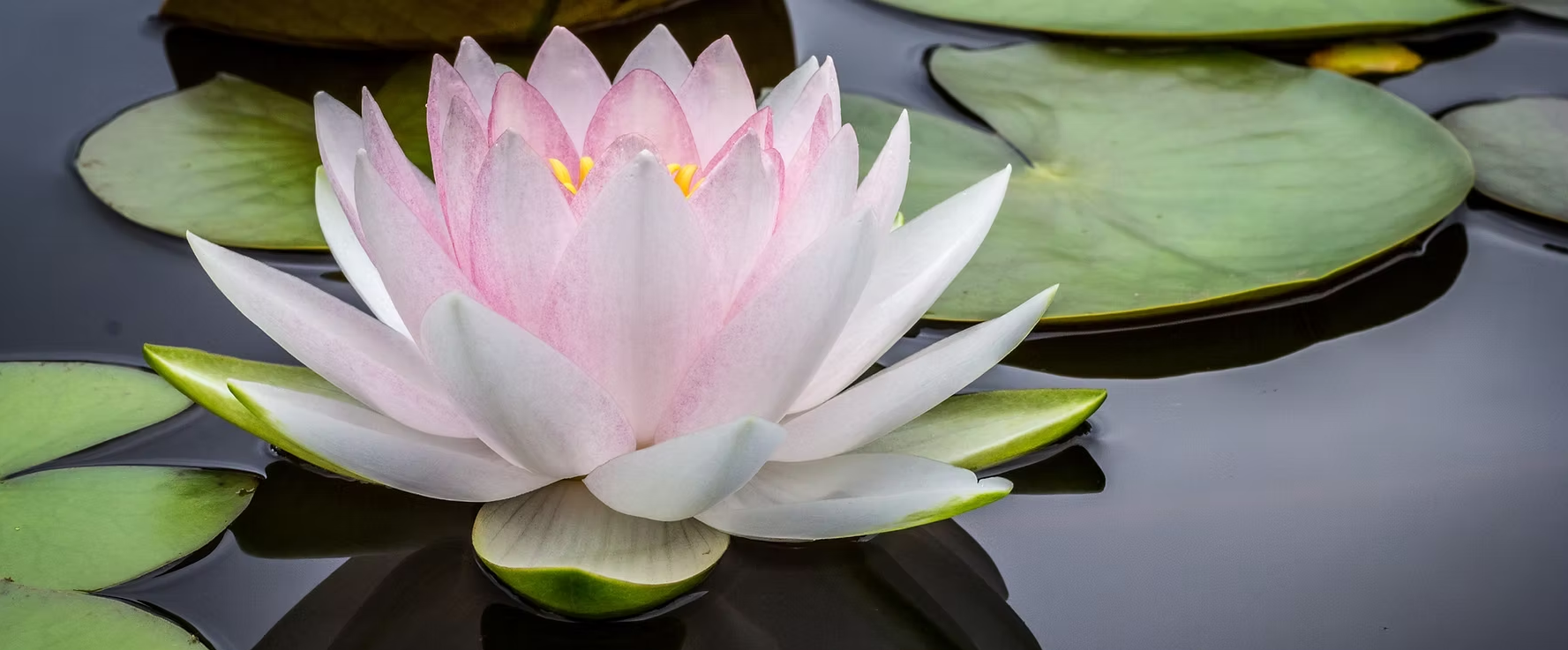
Every Wednesday, I leave the clinic early, so I can take my youngest to gymnastics. Last week, I made it home early enough for me to nip out to the little forest that lives almost at our doorstep. I say forest, but really it's a large nature reserve with a beautiful lake.
And Autumn is already here.
Most of my path was covered by russet, horse-chestnut leaves, with exposed roots from a multitude of trees breaking through the earth. Some belonged to old trees felled years ago, their remains still lying by the side of the path.
When I come here though, what strikes me most are the lotuses. They steal the show. They grow in water that looks completely unremarkable, as do all the lily pads around them. But the lotus is white, with a tinge of pink, and they rise and bloom to produce this magnificent flower.
I feel as if the English language doesn't have the words to describe what I see when I am there. It's as if each one is luminous, with this incandescent light.
The lotus begins in mud, its roots buried deep in the dark, with thick silt at the bottom of the lake. There is no sunlight there.
The water is murky, and the mud contains decaying matter - and this is precisely where the lotus takes root. It is from that darkness, a small shoot will begin to grow.
It does not wait for the mud to become clean, nor for the water to first become clear. It simply grows upward, through the cloudy water, following the light it cannot yet see. And eventually, the stem reaches the surface. The bud rises above the water, and something extraordinary happens: it blooms.
The luminosity that I describe is because the petals have microscopic structures that make any water on them bead up and roll away, thus carrying away any dirt. Scientists call it the "lotus effect" and it's one reason this simple flower has become such a powerful, spiritual symbol.
Because the mud is not a mistake in the lotus' story; it contains all the nutrients from which the plant can grow. It's just that the lotus does not stay buried in it.
Rooted in the mud. Growing through the darkness. Turning towards the light. And truly blooming above the water.
The lotus reminds me that when we find ourselves underwater, the words we say to ourselves matter. We may not yet be able to see the flower, but that does not mean nothing is growing.
The mud is where the lotus begins - not where the lotus ends.
Author's note: As it turns out, these weren't lotuses after all, but waterlilies! I discovered this rather inconvenient fact after writing the article — but, by then, it seemed a shame to let botanical accuracy ruin a perfectly good story.